
LGBTQ+ and Finding a Church That Welcomes You in Charlotte, NC
If you are LGBTQ+ and have tried to find a church home, you already know how exhausting the search can be. Maybe you have walked through doors that felt open, only to sense the quiet conditions attached to the welcome. Maybe you have heard the phrase "love the sinner" one too many times. Maybe you stopped looking altogether.
You are not alone in that experience. Research consistently shows that a large share of LGBTQ+ people raised in faith communities eventually leave them, often because of exclusion, silence, or outright rejection. But the data also shows something else: millions of LGBTQ+ people still carry a real, persistent faith. They are not looking to abandon spirituality. They are looking for a community that makes room for who they actually are.
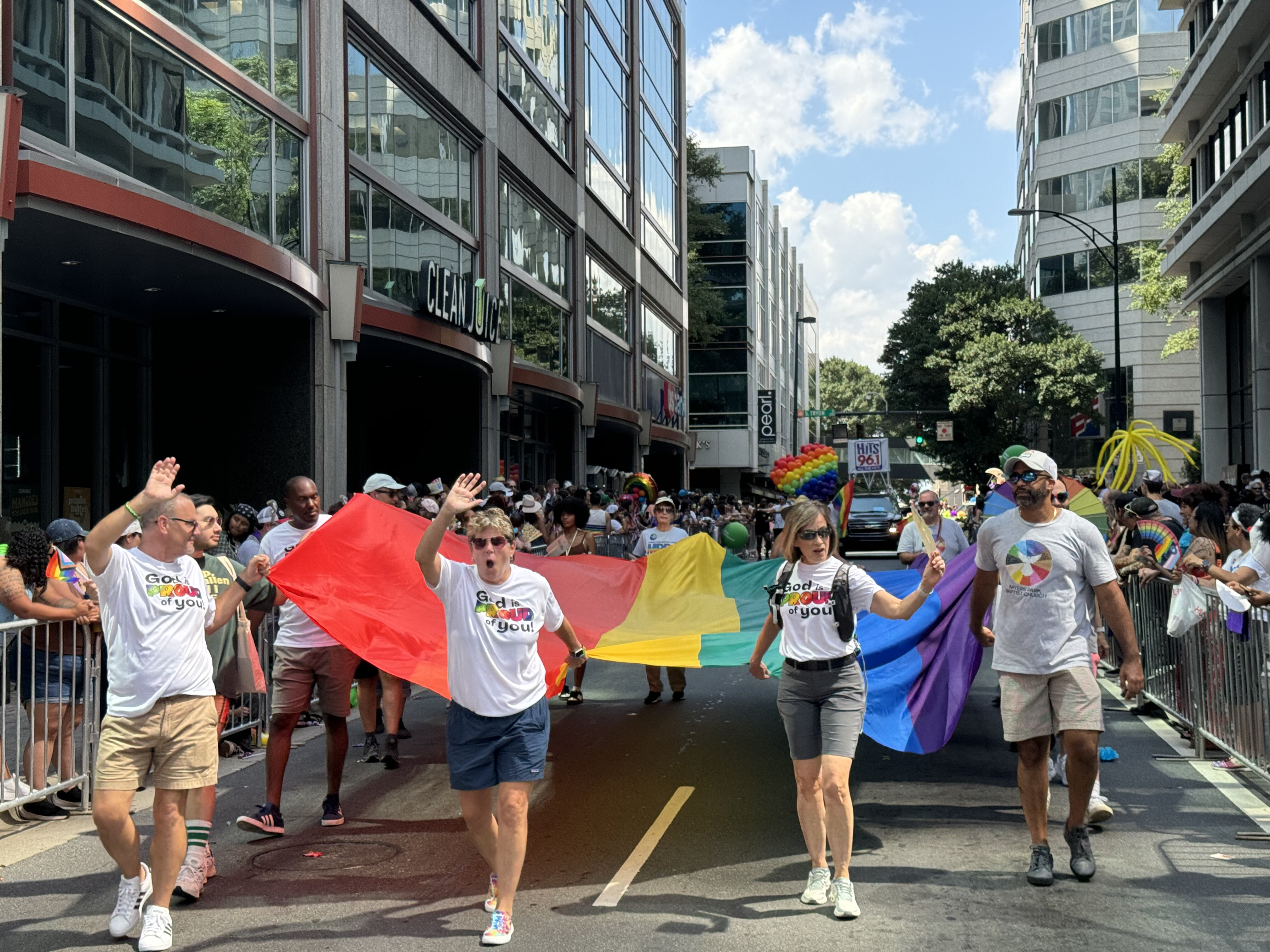
In Charlotte, that community exists. Myers Park Covenant Church at 1900 Queens Road has spent decades building something genuinely different. This is not a church that tolerates LGBTQ+ members. It is a church that has organized marches, sponsored Charlotte Pride, enshrined inclusion in its foundational covenant, and been formally recognized by the Human Rights Campaign for its commitment. The difference is worth understanding.
The Weight of Finding a Place to Belong
According to the Pew Research Center, only 48 percent of LGBTQ+ adults in the United States identify with any religion, compared to 73 percent of non-LGBTQ+ Americans. That gap is not an accident. It reflects decades of messaging from religious institutions that told queer people their identities were incompatible with faith. The consequences have been real and lasting.
Researchers at the Williams Institute at UCLA found that nearly two-thirds of LGBTQ+ adults raised in Christian households have left the church. Nearly half of Americans who have left religion altogether cite their church's treatment of LGBTQ+ people as a contributing factor, not just LGBTQ+ people themselves, but straight allies who could not reconcile the exclusion with their own values.
Charlotte is a deeply churched city. For many people here, faith is woven into how neighborhoods work, how people meet, and how community gets formed. When LGBTQ+ residents feel shut out of that fabric, the cost is more than spiritual. It is social. Affirming churches in Charlotte matter not just as places of worship, but as places of genuine belonging.
What "Affirming" Actually Means at Myers Park Covenant
The word "affirming" gets used loosely in religious contexts. Sometimes it means a church will not ask you to leave. Sometimes it means LGBTQ+ members are welcome to attend but not to lead, marry, or fully participate. At Myers Park Covenant Church, the meaning is straightforward: all people are welcome without conditions, without asterisks, and without a separate tier of membership.
MPBC's covenant phrase has been "open to all and closed to none" since the church's founding in 1943. The congregation voted in 1965 to formally open its doors to people of all races during the civil rights movement, a decision that required real courage in the South at the time. Decades later, after a seven-year discernment process involving discussions, guest speakers, and congregational dialogue, the church formally extended its affirmation to include LGBTQ+ people.
That commitment was tested publicly when the North Carolina Baptist State Convention passed legislation against LGBTQ+-affirming churches. MPBC did not quietly withdraw. It confronted the policy directly and was ultimately expelled from the Convention for its stance. The Human Rights Campaign and the Association of Welcoming and Affirming Baptists both formally recognized the church for that decision.
Today, MPBC is one of the only churches in Charlotte that serves as an official sponsor of Charlotte Pride. Congregation members have received Champions of Pride awards for their advocacy work. The church has hosted allyship conferences and its leadership has consistently included people of diverse genders, orientations, and backgrounds.
A Church That Does Not Ask You to Leave Yourself at the Door
One of the things that distinguishes Myers Park Covenant from churches with softer approaches to inclusion is that LGBTQ+ members participate fully in every area of congregational life. The church has a long record of LGBTQ+ members serving in leadership roles, including as deacons. MPBC has performed same-sex ceremonies and conducted child dedications for queer families. There is no back row reserved for people the church is still deciding about.
The church is also ecumenical and interfaith by design, drawing members from Catholic, Jewish, Protestant, and non-religious backgrounds. If you are someone who has complicated feelings about religious institutions more broadly, that is not disqualifying here. MPBC has always held freedom of belief as a founding principle. Members are not expected to conform to a specific doctrine. The covenant binds the community together not by theology but by a shared commitment to love, justice, and mutual respect.
For LGBTQ+ people who have spent years feeling like a theological debate rather than a whole person, that distinction matters enormously.
Charlotte Has Options. Here Is What Sets MPBC Apart.
Charlotte does have a meaningful number of LGBTQ+-friendly churches, and that is worth acknowledging. Charlotte Pride maintains a community interfaith directory that lists affirming congregations across denominations, from Episcopal and Lutheran churches to independent and nondenominational communities. For anyone doing this search, that directory is a worthwhile starting point.
What distinguishes Myers Park Covenant within that landscape is depth and history. Many affirming churches have adopted welcoming policies in the last decade as cultural attitudes shifted. MPBC's commitment predates that shift by years, rooted in a congregational decision made through years of genuine discernment rather than in response to external pressure. The church did not change its position when it became easier to do so. It changed it when doing so meant real institutional consequences.
That history is not a marketing point. It is evidence of what the culture inside the building actually feels like.
What to Expect If You Visit
Myers Park Covenant Church holds Sunday services at 1900 Queens Road in Charlotte's Myers Park neighborhood. If you are not ready to walk in on a Sunday, the church livestreams its services and hosts videos of past sermons on the website, which is a genuinely low-stakes way to get a sense of the community before showing up in person.
MPBC also runs small groups, justice and advocacy ministries, youth programming, and community events throughout the year. If Sunday morning feels like too much of a first step, getting connected through a smaller group or attending a community event can be a more accessible entry point.
The church's campus also includes the Cornwell Center, a health and wellness facility, and a public prayer labyrinth along the exterior that is open 24 hours a day. That last detail is worth noting: the labyrinth is available to anyone in Charlotte who needs a quiet, contemplative space, no membership required.
You Do Not Have to Choose Between Faith and Being Yourself
The question many LGBTQ+ people carry into a church search is not really about denominations or doctrine. It is a quieter and more personal question: Is there a place where I do not have to perform a version of myself to be accepted?
Myers Park Covenant Church has been working to answer that question with action for decades. The church has made decisions that cost it institutional affiliations. It has stood publicly at Charlotte Pride. It has built a congregation where LGBTQ+ members lead, preach, and raise families without being treated as exceptions to the rule.
If you are an LGBTQ+ person in Charlotte, or an ally looking for a church community that takes inclusion seriously, Myers Park Covenant is a place worth considering. You can learn more about the church's inclusion initiatives or plan a visit at myersparkbaptist.org.